I spent time in the equestrian ring this year. It’s a particularly special to me because the Traverse City horse shows are just down the way from our family house. Quite convenient. From all of my research I do before a new sport, I felt like the technical and focus settings recommendations led me astray for equestrian initially so I wanted to provide my thoughts after having a season under my belt.
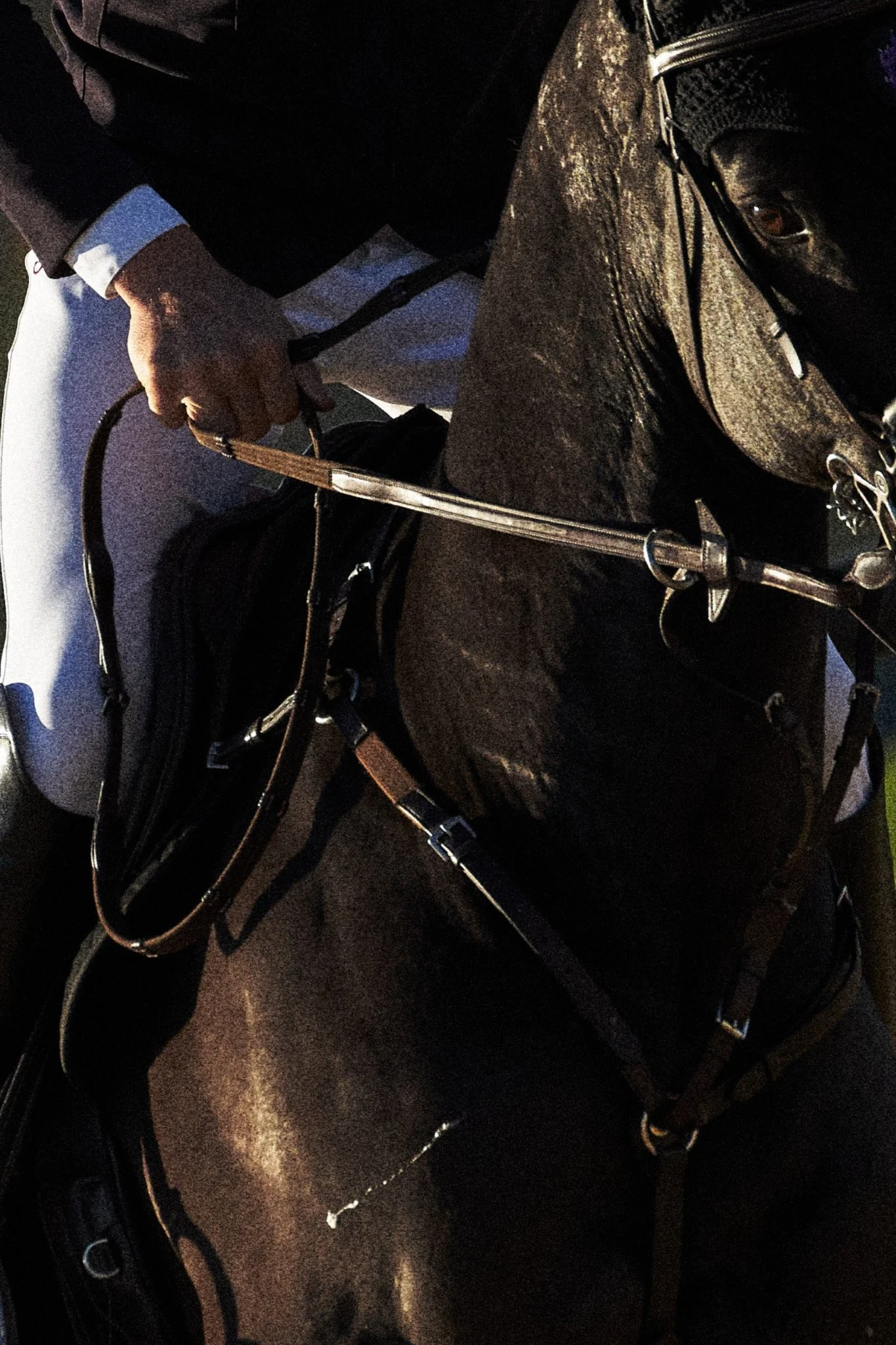
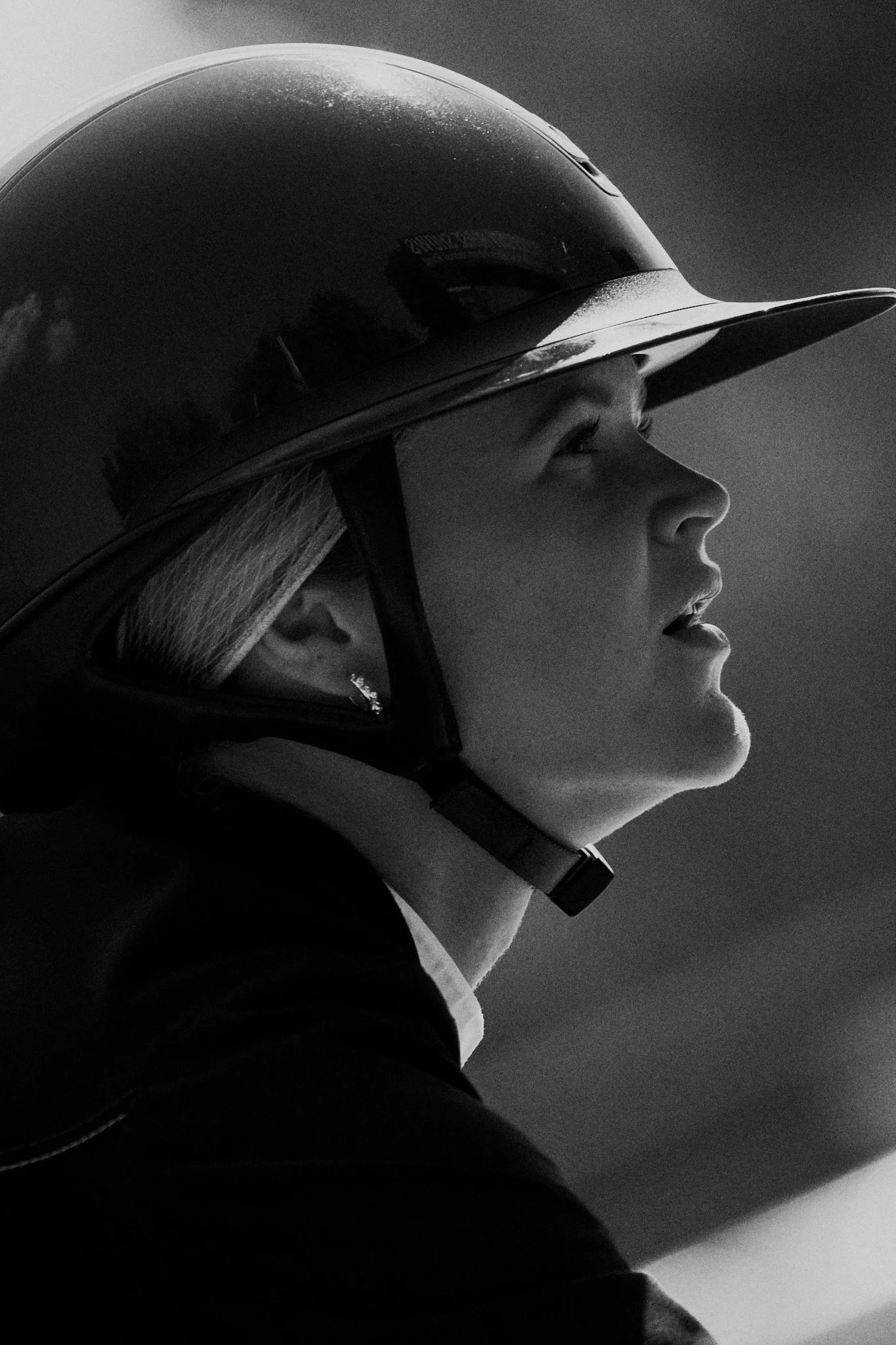
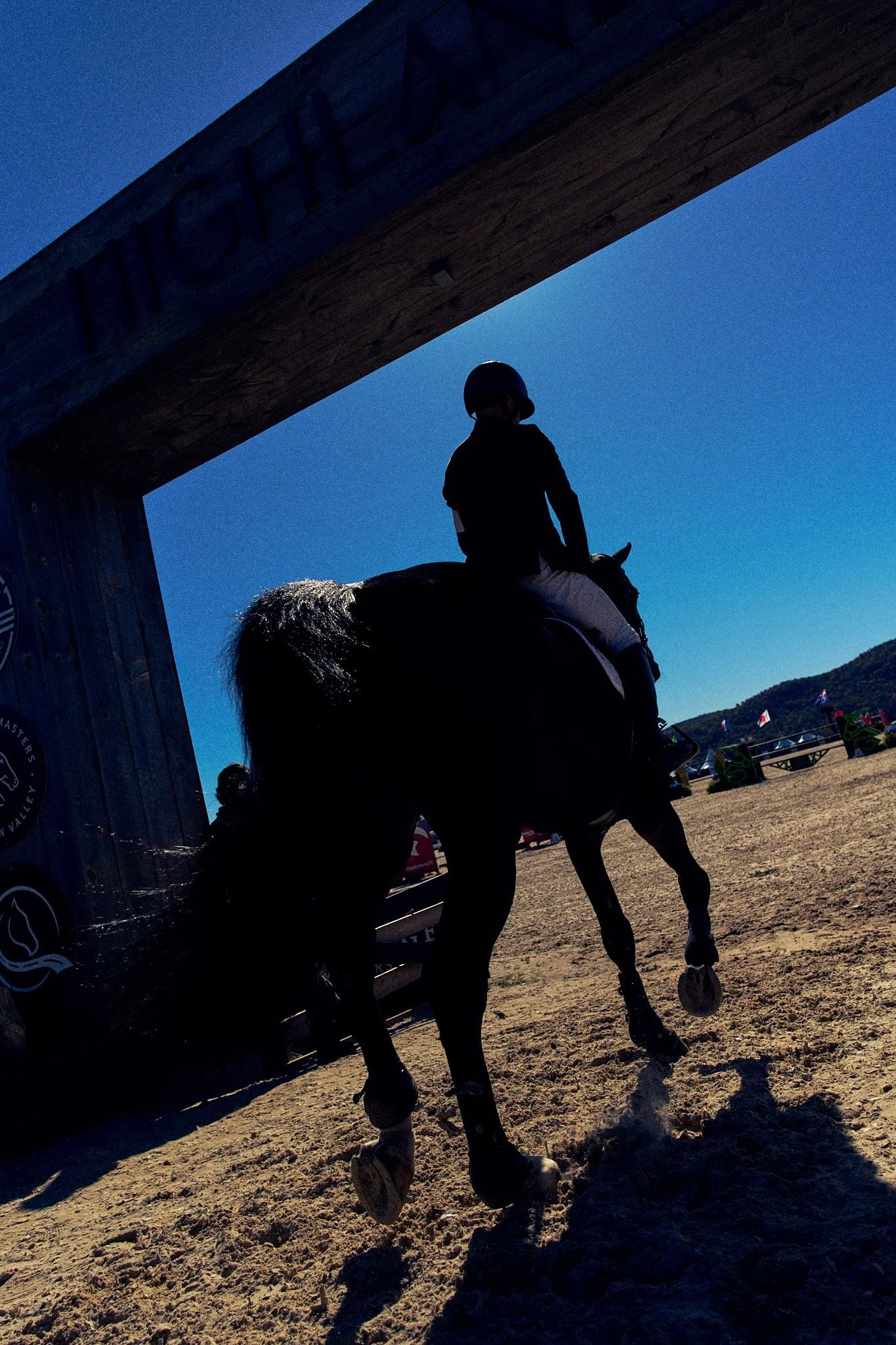
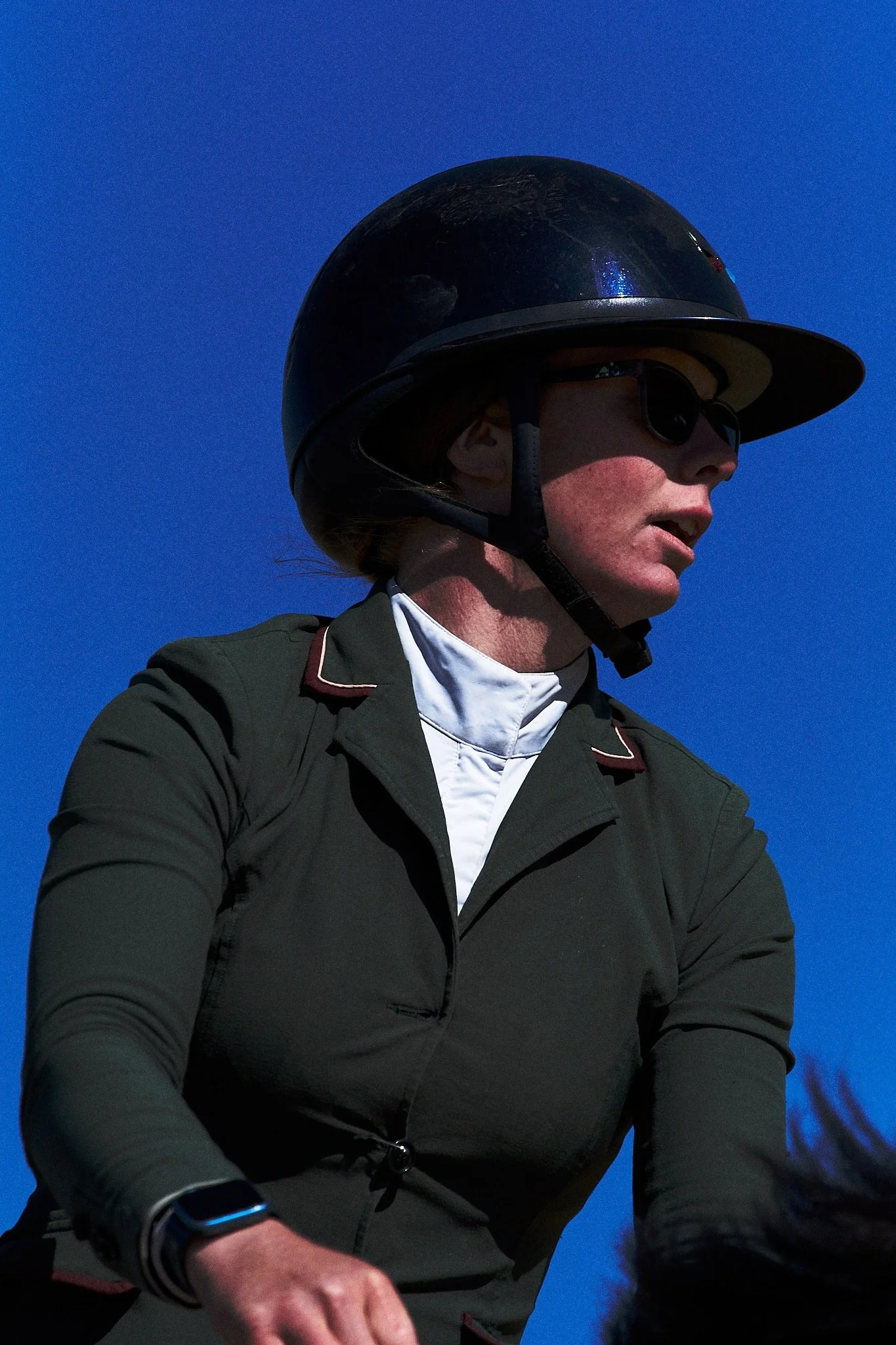
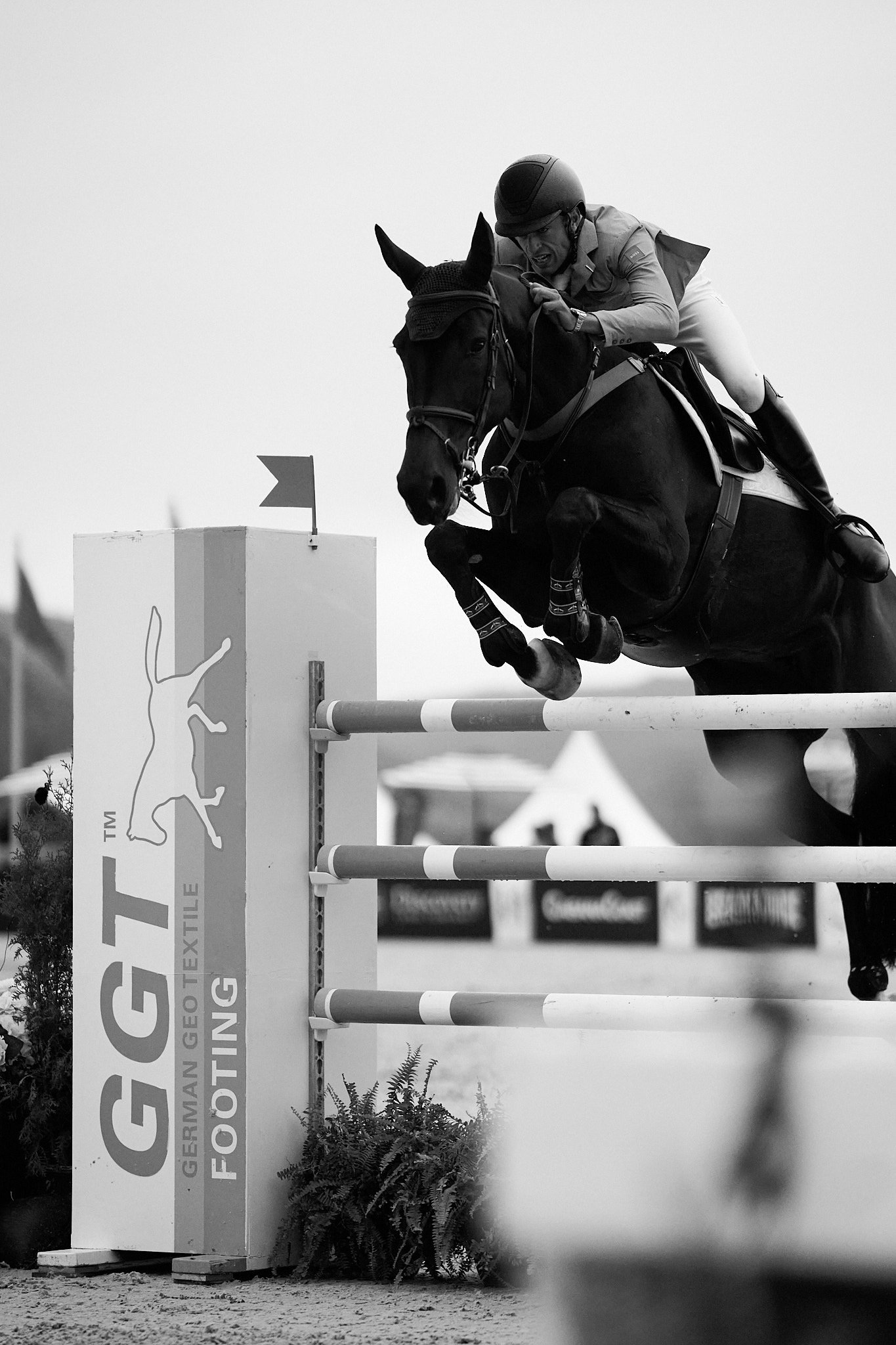
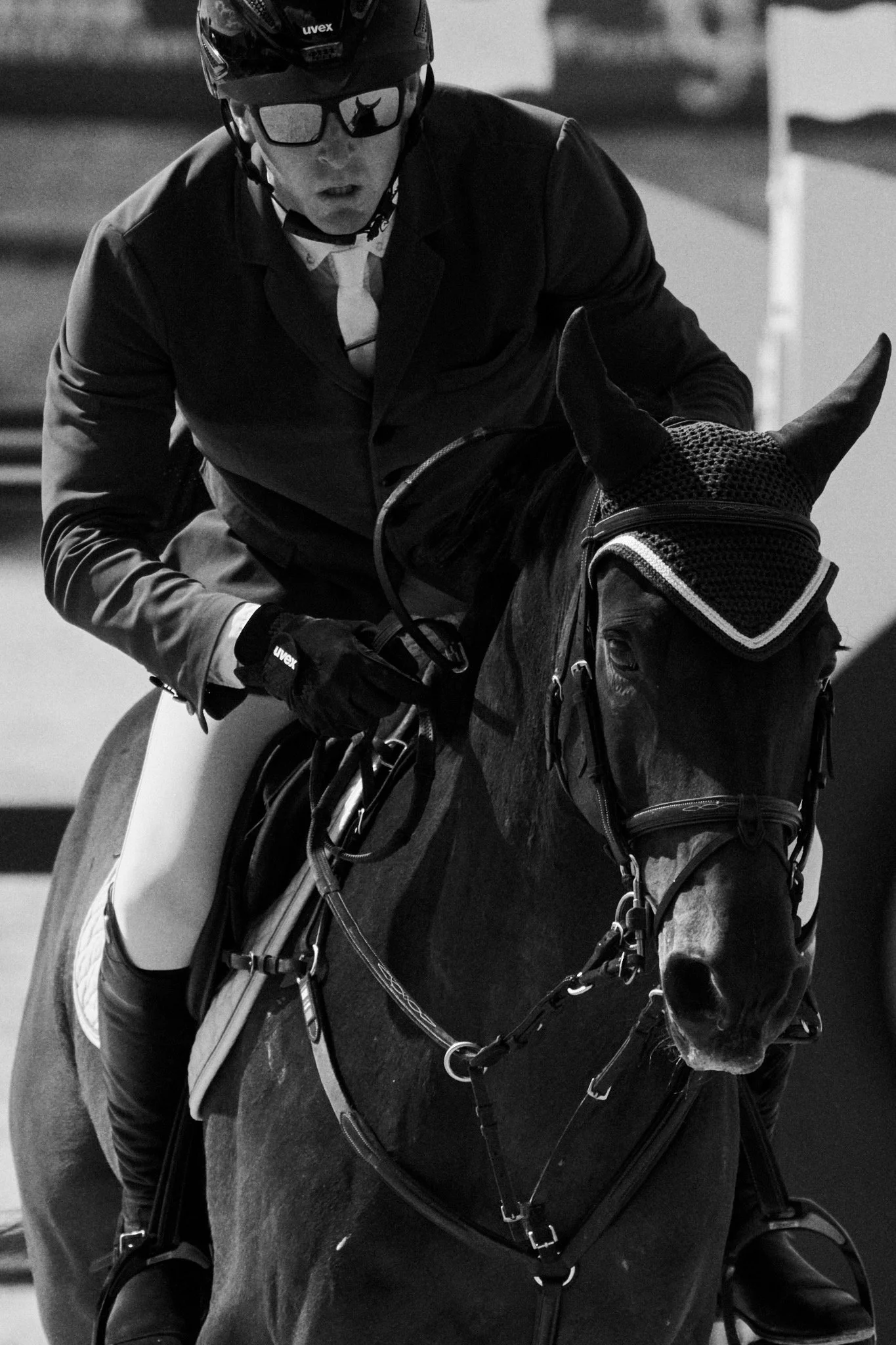
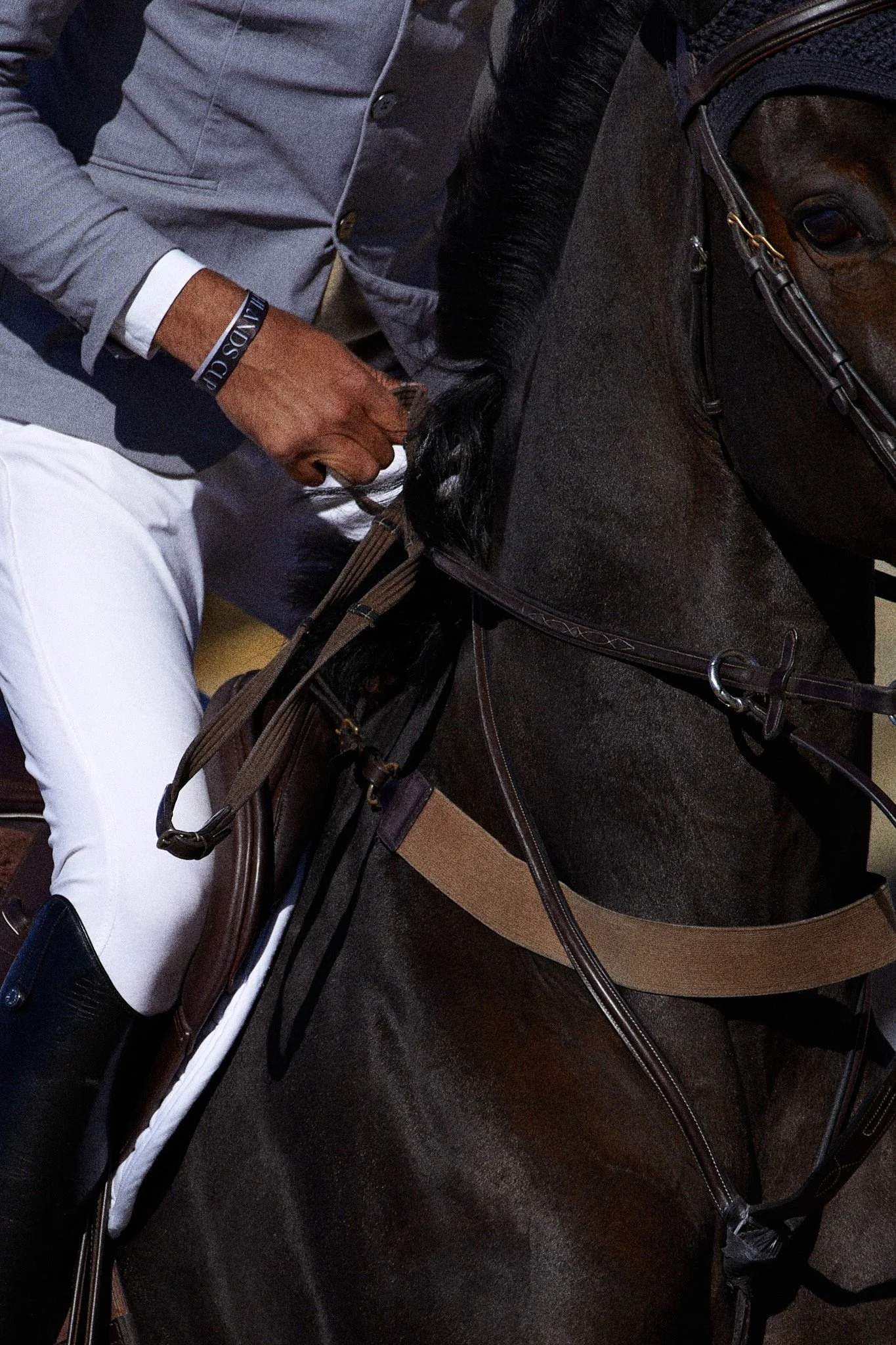
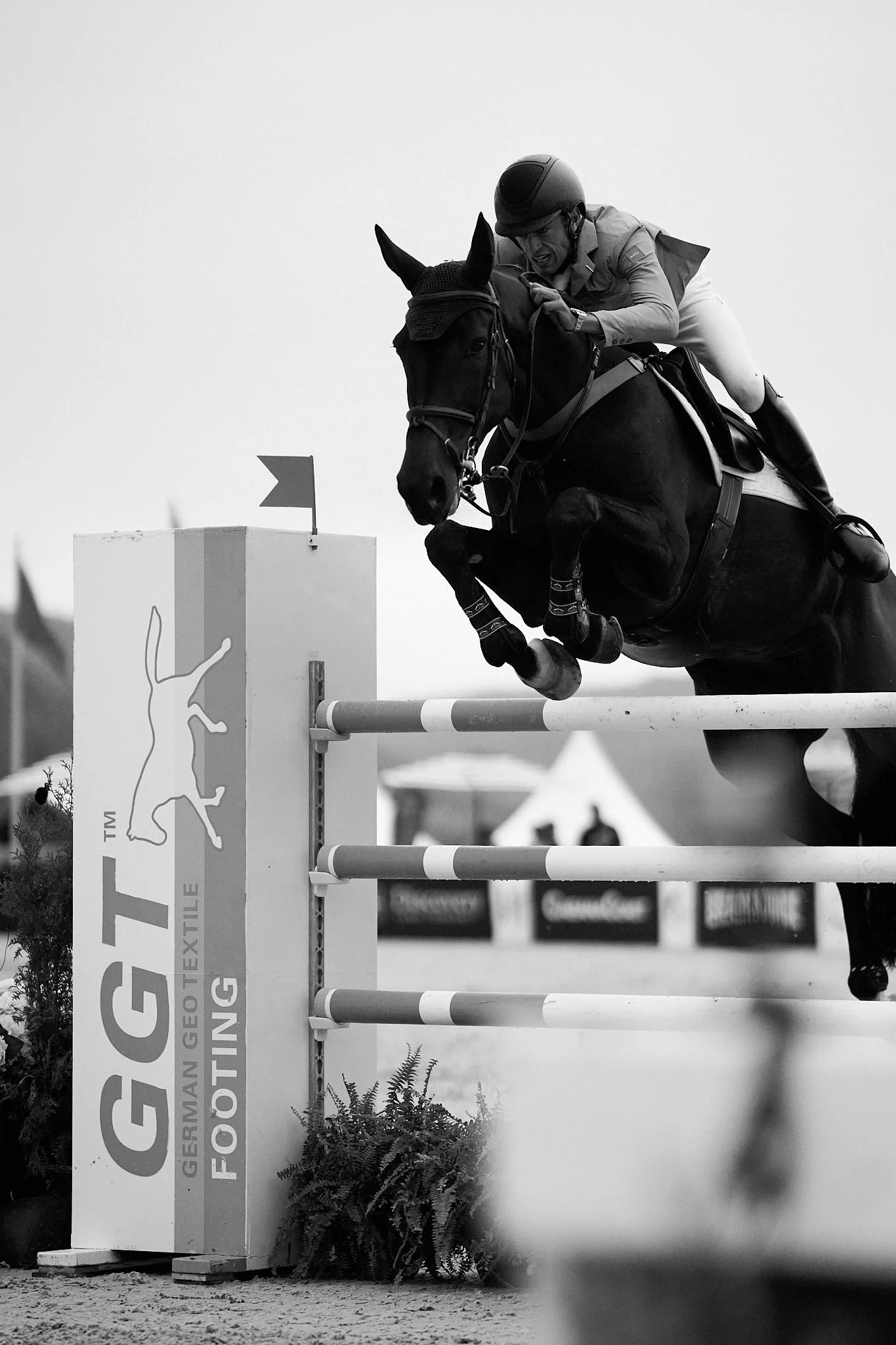
This was the winning shot of the Rene Dittmer crossing the final hurdle for the MLSJ Highlands Cup at Silo Horse Ridge and I was very happy I got this one clean and in focus.
Focus Timing over the jump
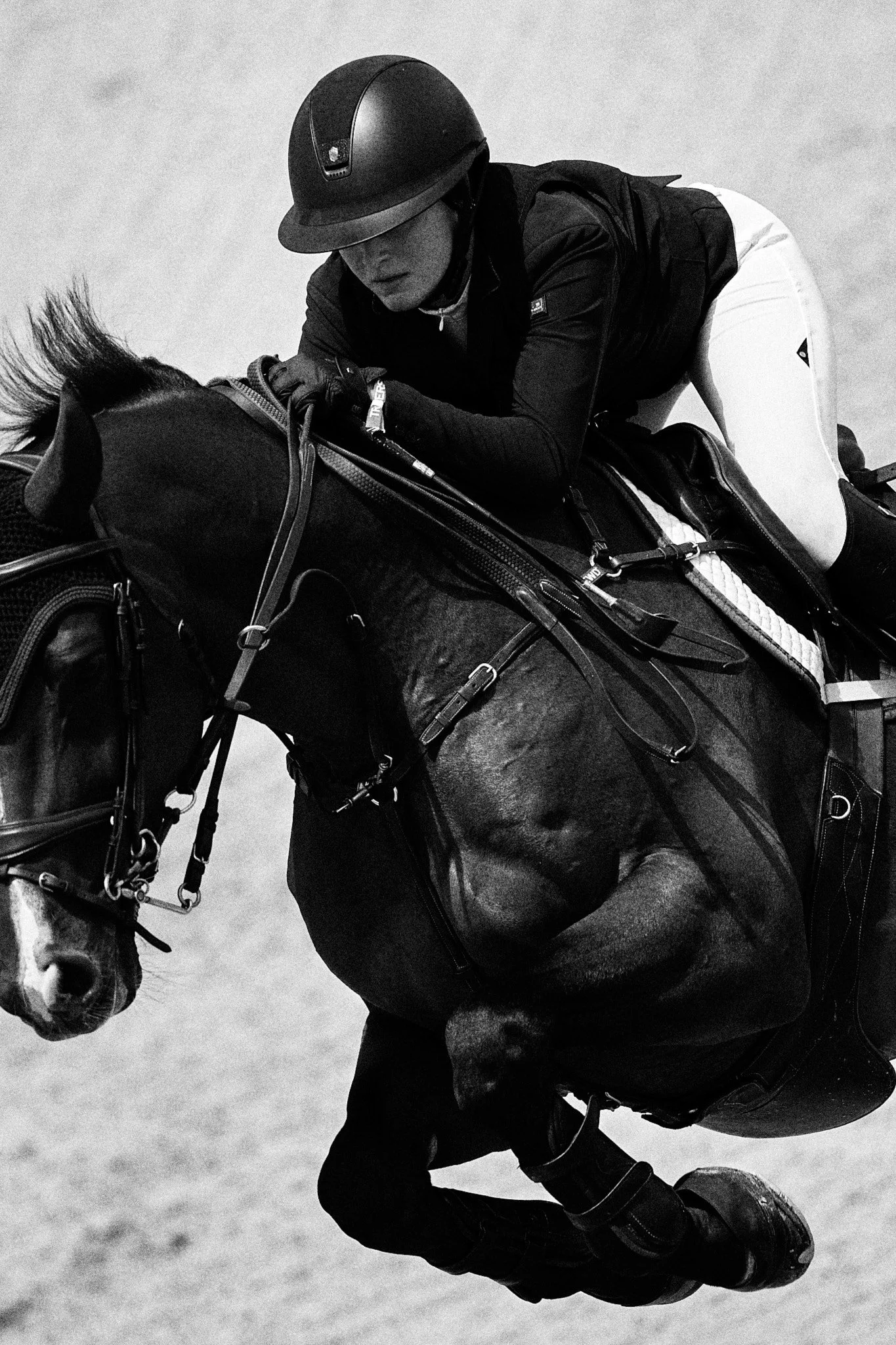
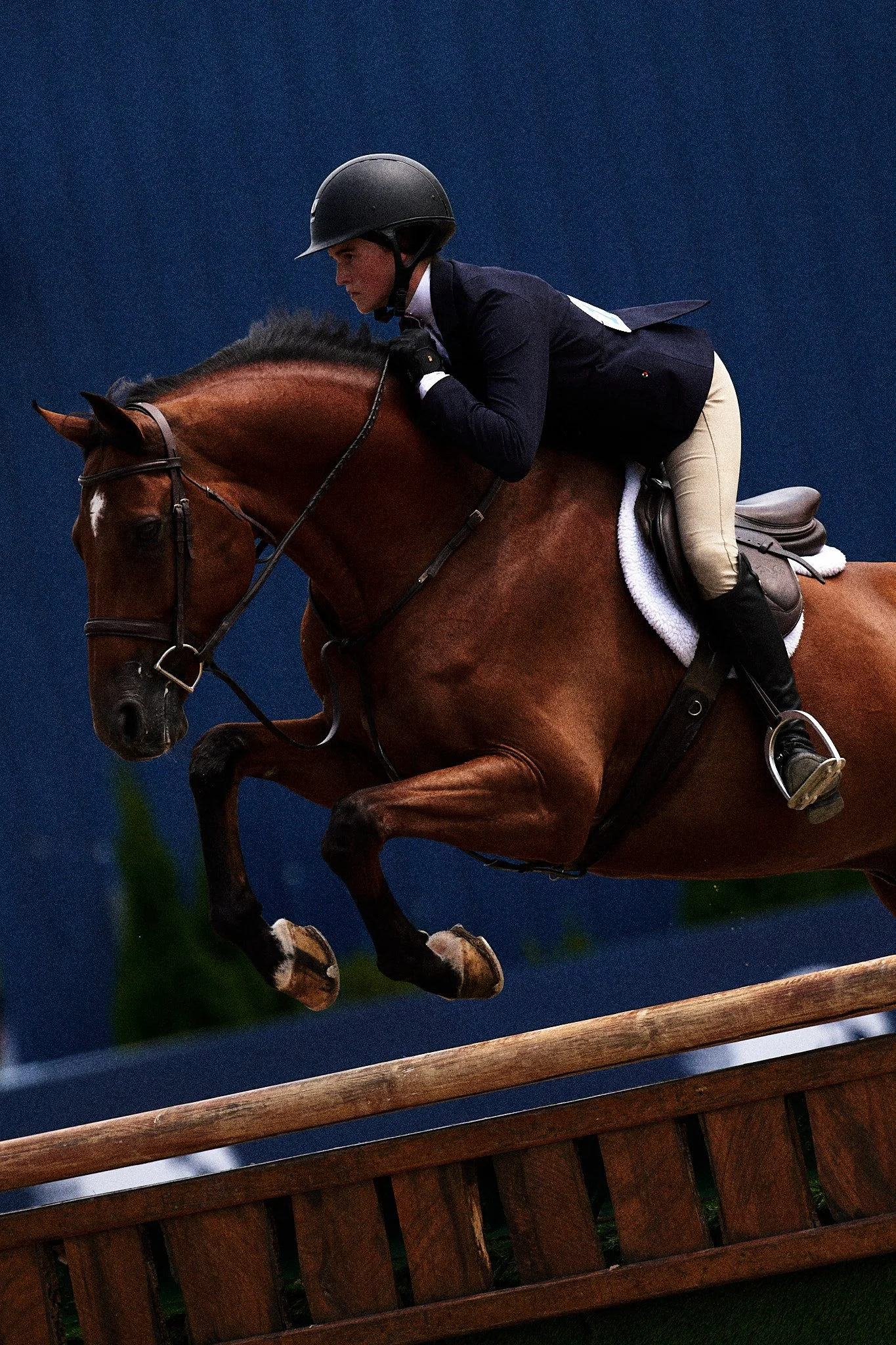
The most difficult part of capturing the athlete is the elevation over the jump.
That’s also the moment most brands, athletes, and leagues care about. They’re looking for:
Big jumps
Clean form
That peak moment over the obstacle
The challenge is that the camera gets confused.
You have tall jumps in front of the athlete, and the camera naturally wants to grab focus it.
What I found worked best was locking focus right after elevation.
As soon as the horse clears the bar and starts to rise above it, that’s when I’m looking to lock in and track through the rest of the jump — from the top through the landing.
Trust your focus speed and that the camera will grab the subject quickly.
Trying to lock focus too early, while the horse is still approaching or just leaving the ground, can be error prone. You might grab focus on the jump itself and miss the actual moment you care about.
On the technical side, a few things that have worked well for me:
Continuous autofocus (AF-C) — a given
Moderate tracking sensitivity — so you can recover quickly if focus grabs the wrong subject
Flexible Spot / Expanded Flexible Spot — especially on Sony
I typically use the expand flexible spot. These subjects are relatively predictable in their movement, so you don’t need something overly aggressive like full tracking across the entire frame.
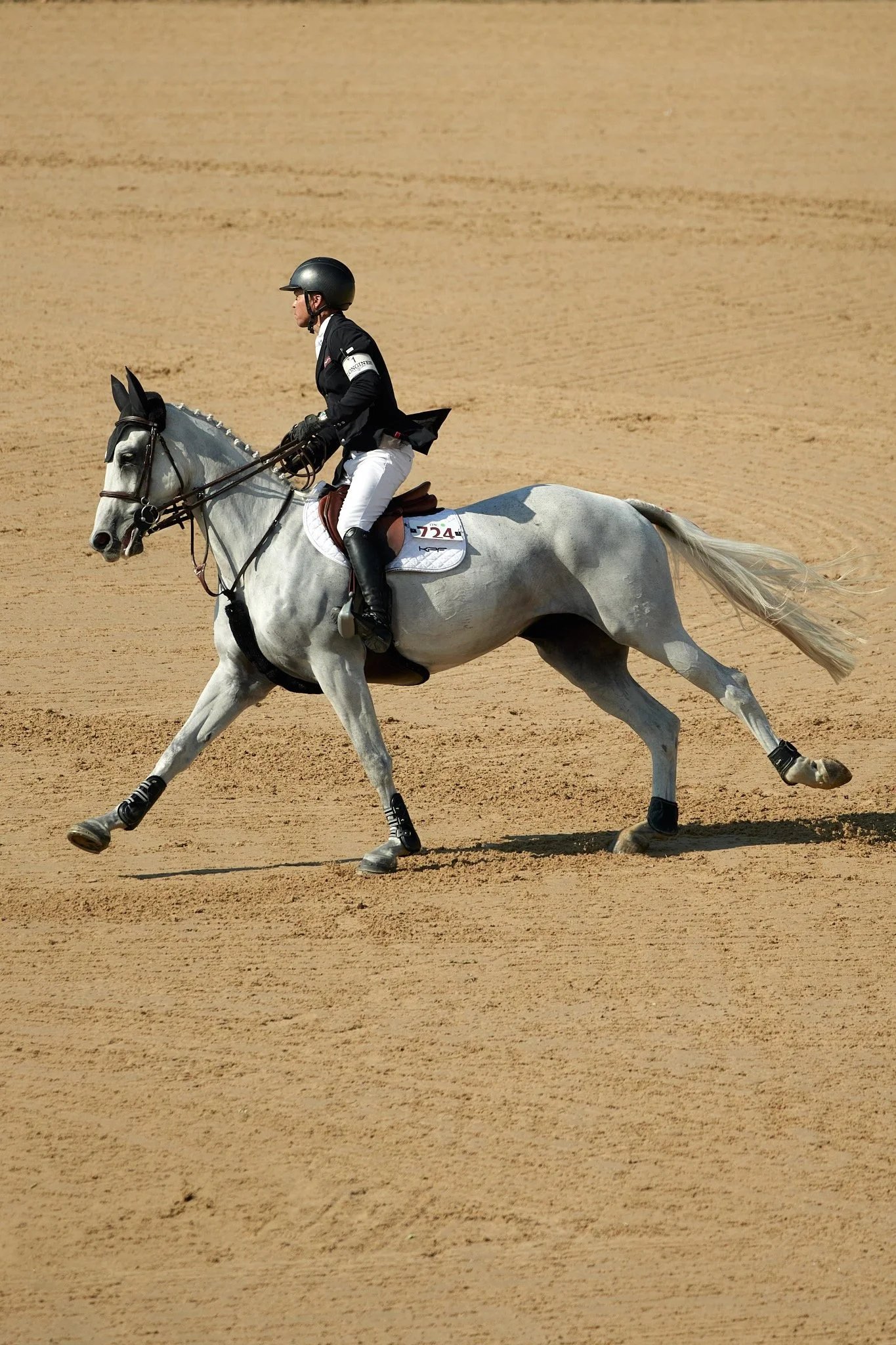
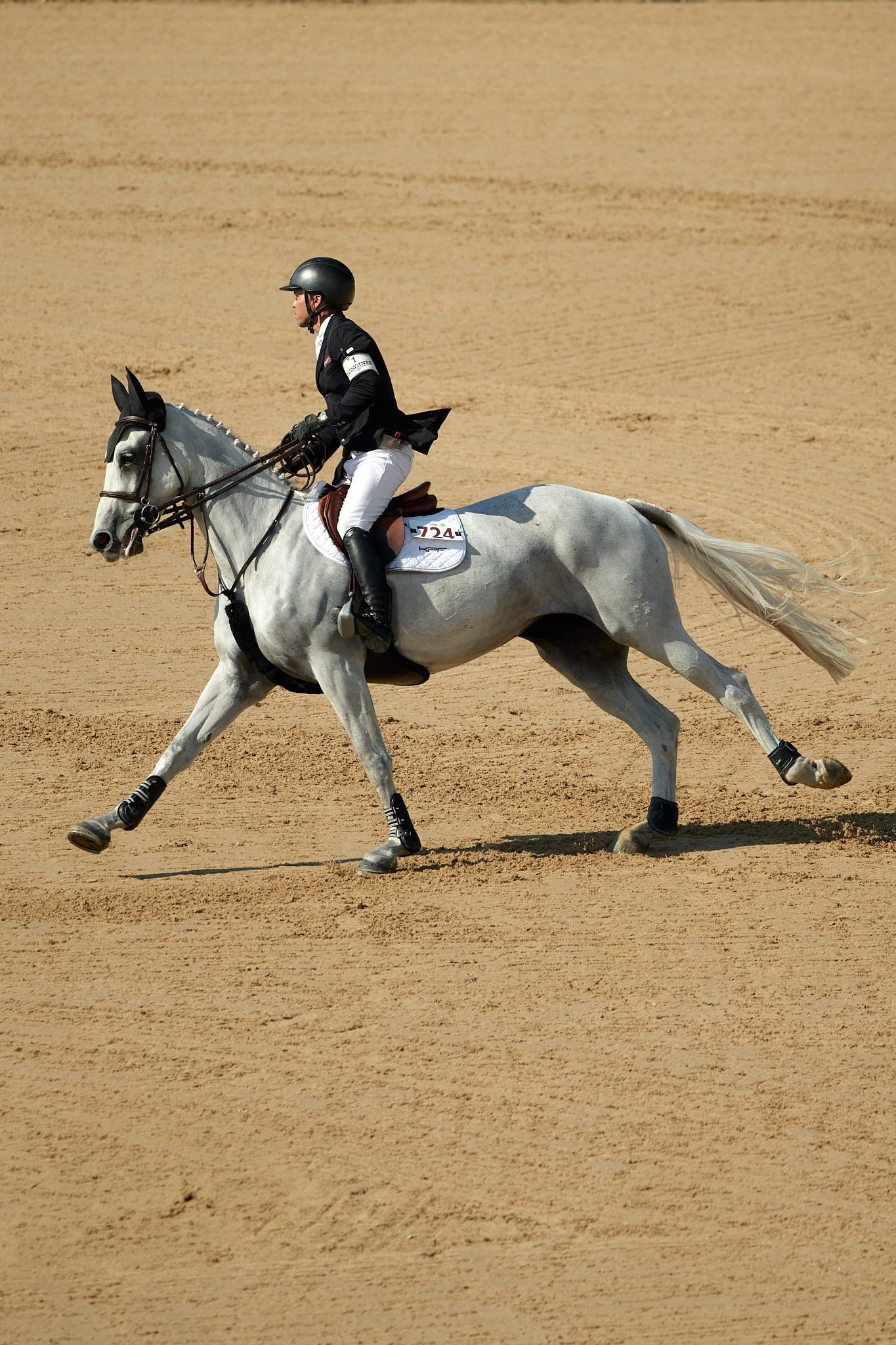
Kent Farrington rides in the Traverse City FEI jumping World Cup in Williamsburg, Michigan.
Managing movement and cropping
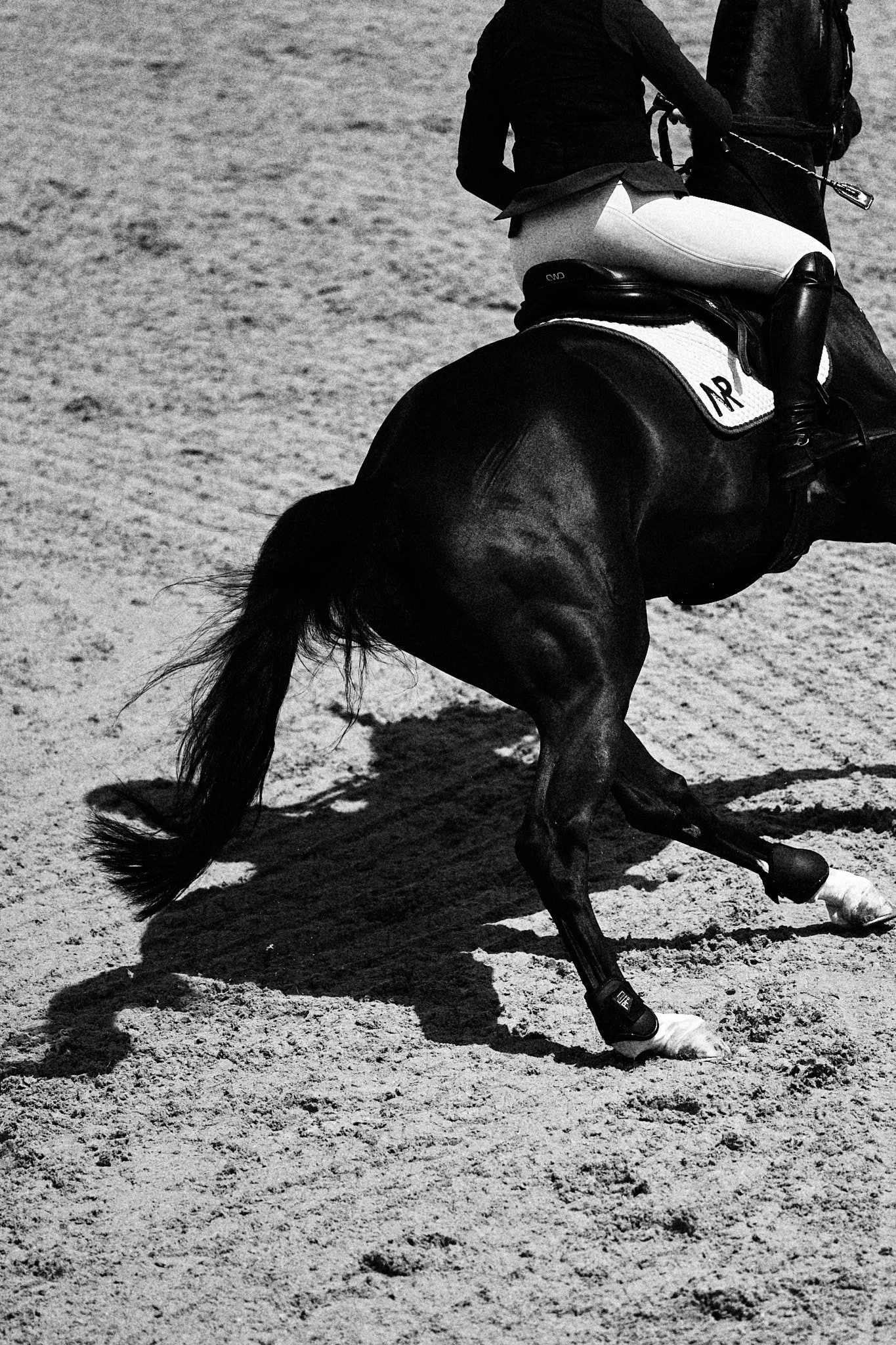
Horses have a pretty aggressive galloping motion, with a lot of vertical movement.
That up-and-down motion can make it tough to keep everything framed perfectly, especially if you’re shooting tight.
We know the path the horse is going to take but the way it moves is unique.
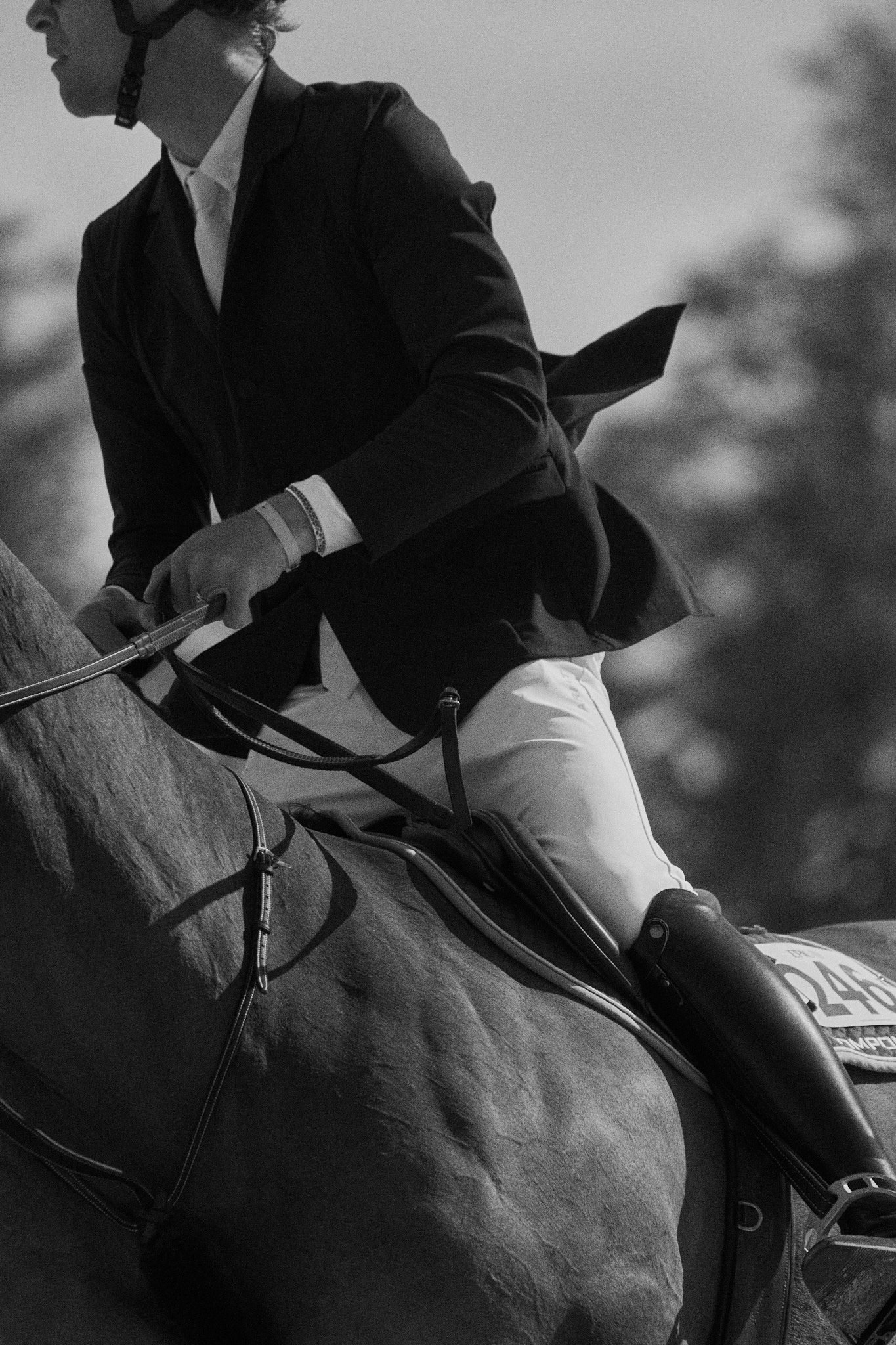
Because of that, I tend to be pretty liberal with cropping in this sport. I give myself a little more space to play with around the subject.
Environmental Considerations
This environment is also just different from most sports.
You’re dealing with:
Sand
Dirt
Horse poop
So you have to be a little more intentional about protecting your gear.
So it’s worth planning for:
Cleaning your gear after the shoot
Wiping things down during breaks
Bringing a towel
It’s not the cleanest environment, and that will affect equipment.
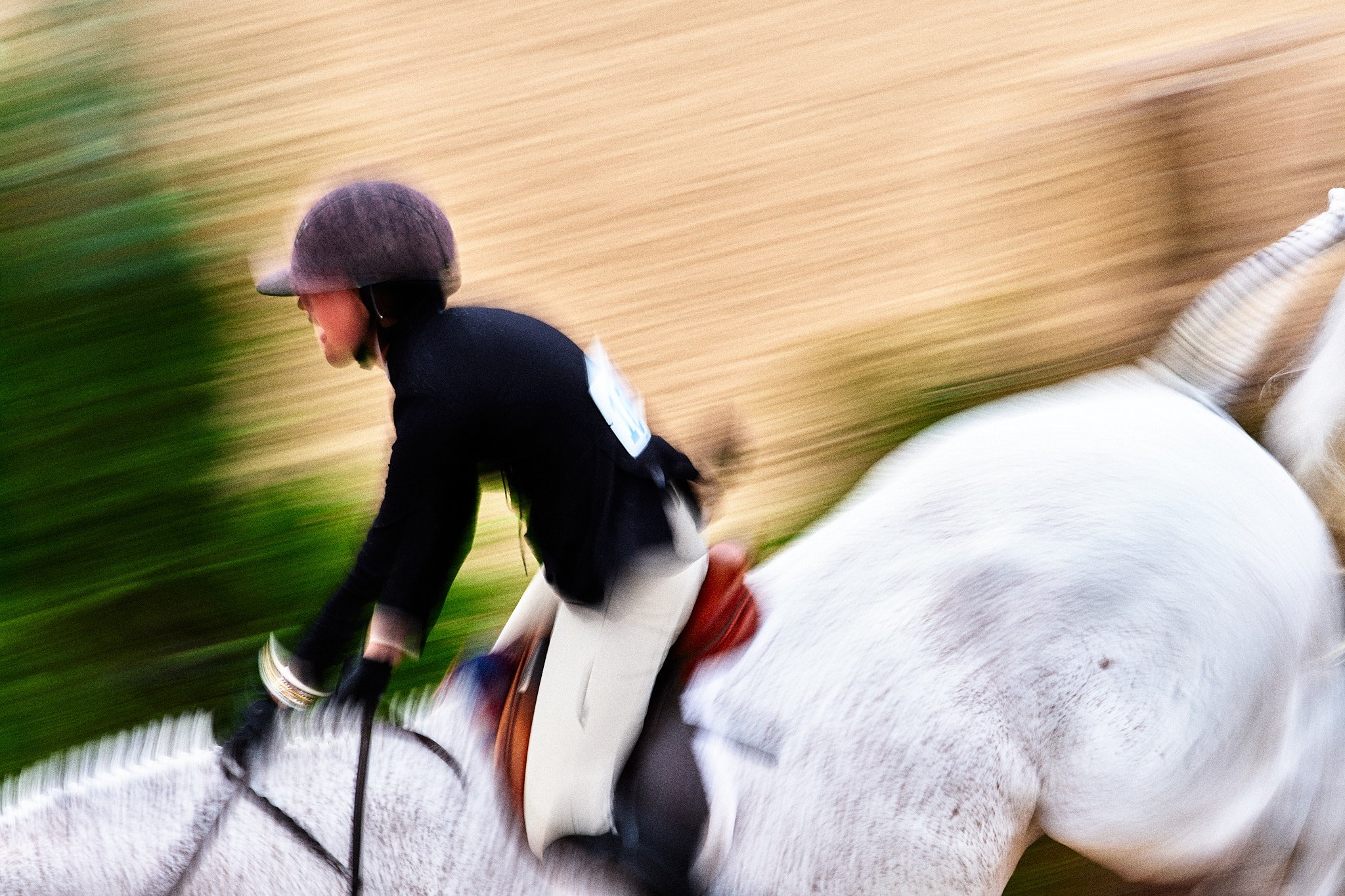
Depth of field choice
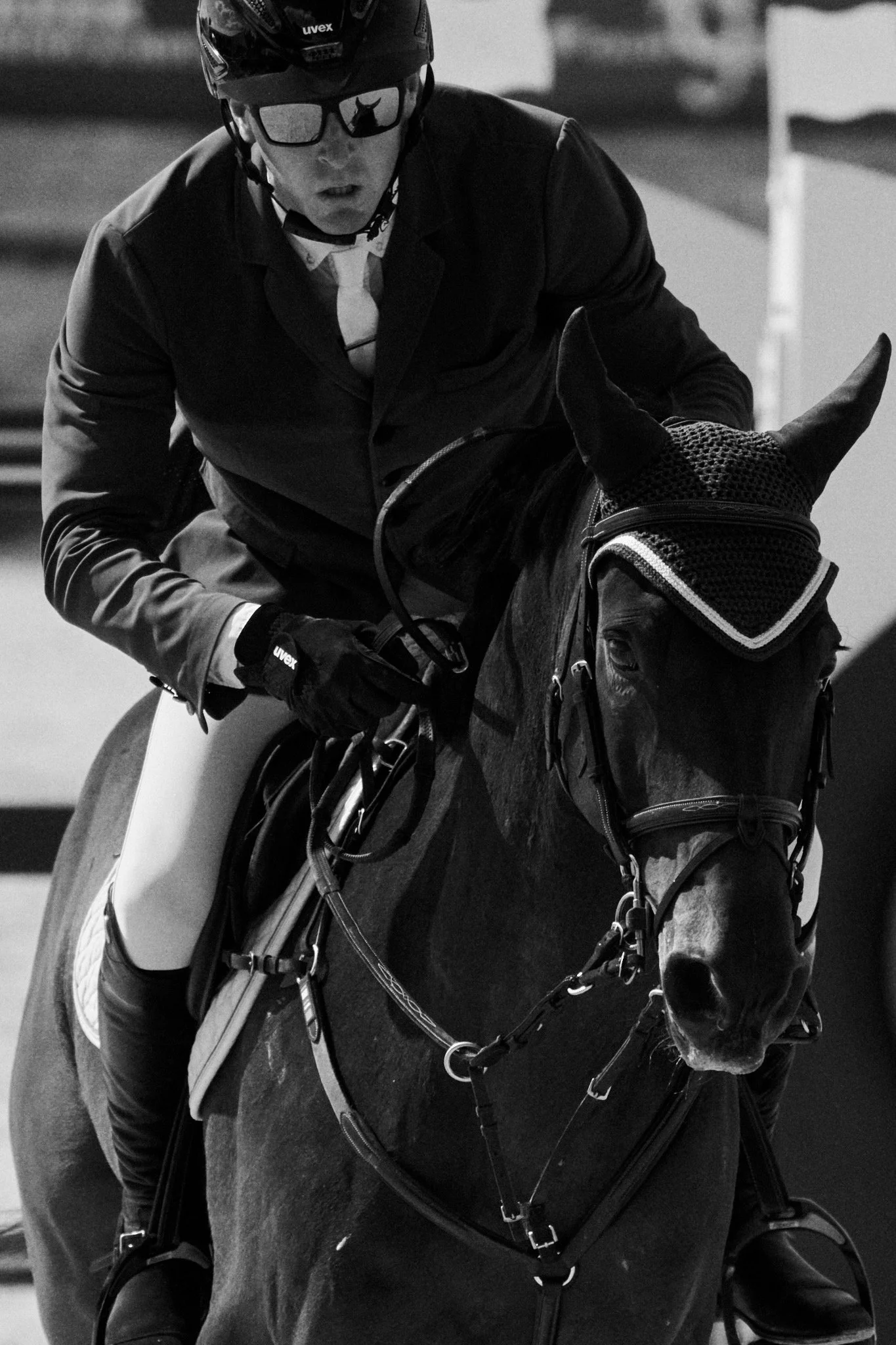
From a depth of field perspective, I tend to lean toward a tighter aperture for equestrian.
Something like: f/4, f/5.6, or higher
The reason is that you’re not just photographing a person — you’re photographing a rider and a horse, a much larger subject.
I wrote more about my first experience working with equestrian sports and more nuance of the engagement including observations on the venue, access level, schedule, and other topics.