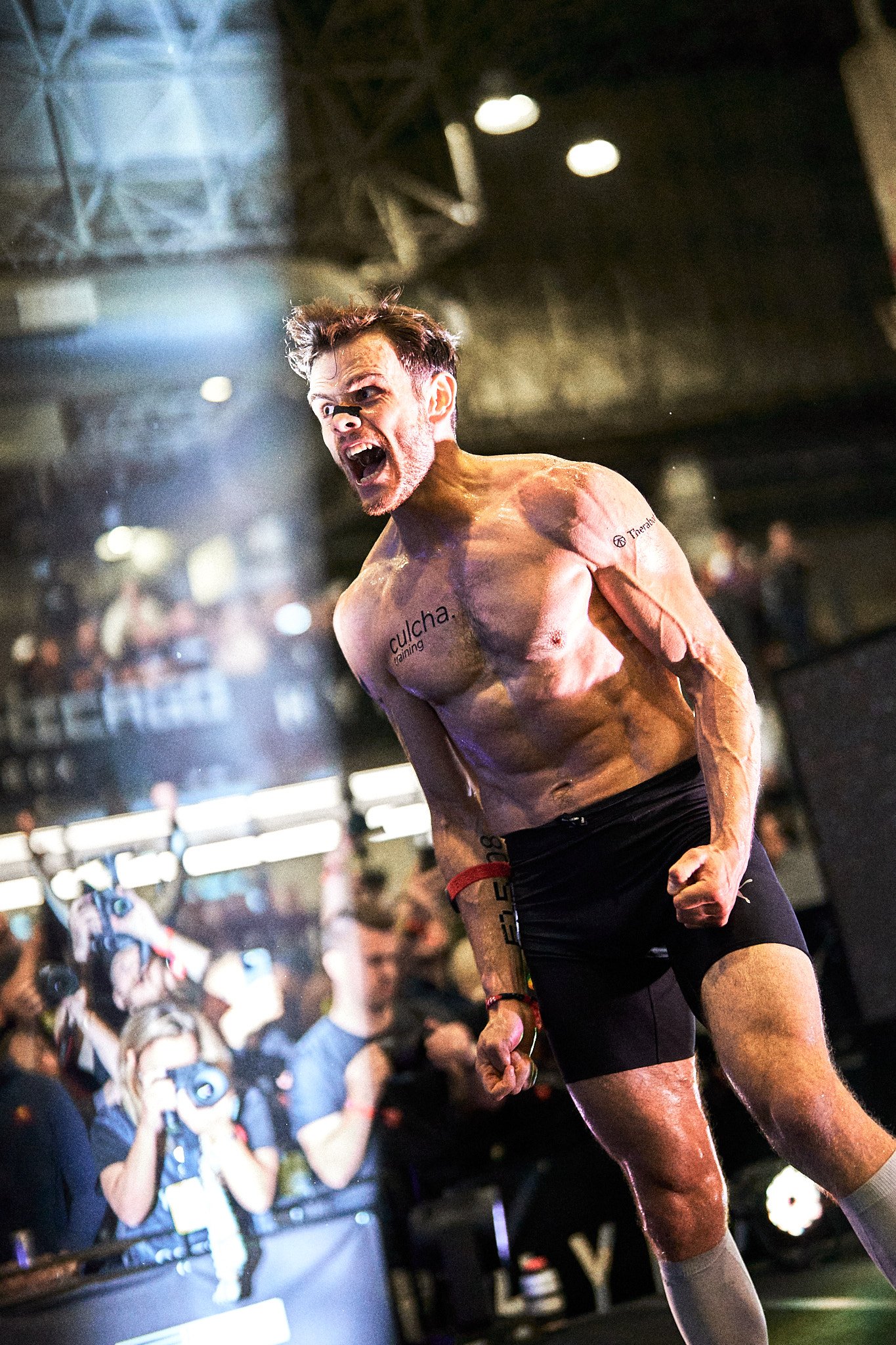
Techniques for shooting sports in low light conditions - Hybrid Fitness Edition
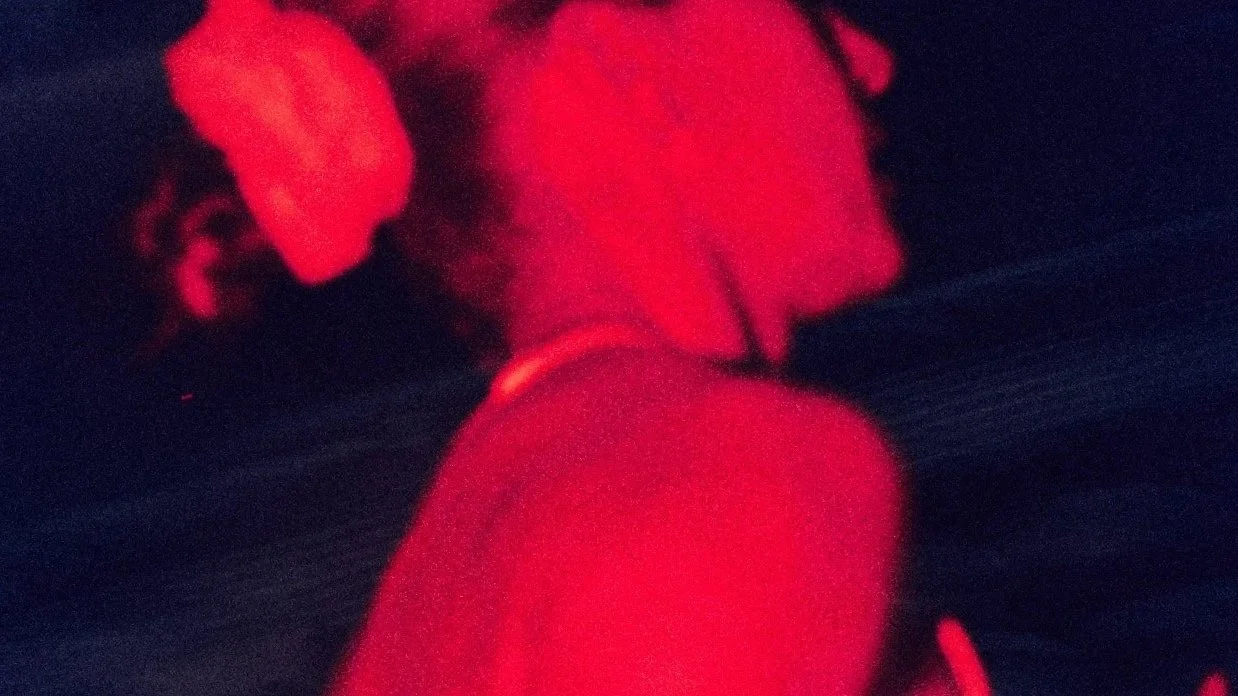
I’ve spent a lot of time working in hybrid fitness arenas, specifically HYROX. These events are frequently held in conference centers and places without any natural light, so they’re very different from traditional outdoor sports and can be tough! I wrote a general photographers guide to cover all the bases separately. In this post, I speak only to camera settings for low light!
I’m going to walk through a few techniques that make it a lot easier for me to shoot sports in low light conditions.
1 using shutter drag
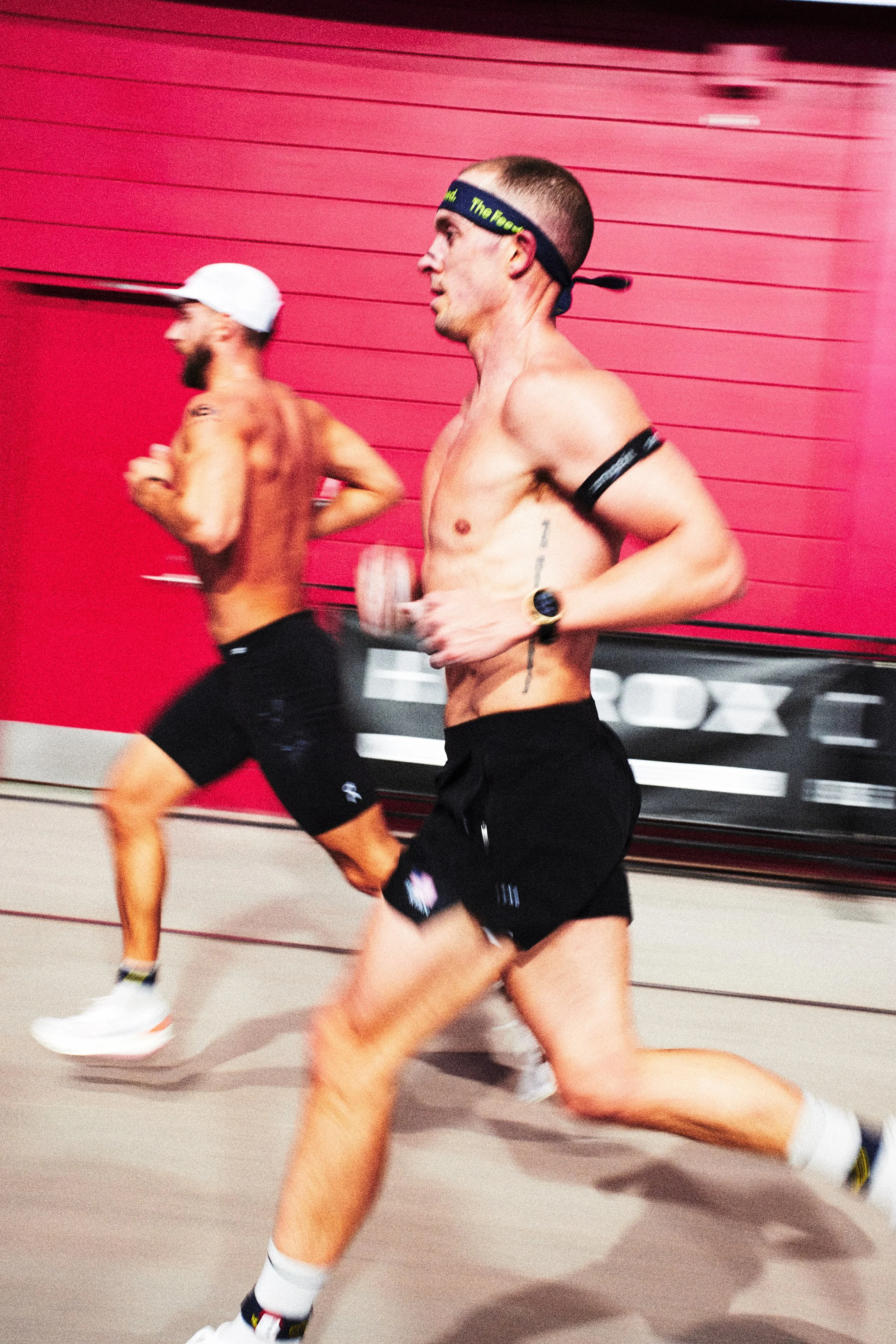
The first technique you’ll see is dropping your shutter speed and getting motion blur (with panning).
When the light is low, you can bring your shutter speed down without using an ND filter and introduce shutter drag. Personally, I don’t love too extreme of shutter drag, but I do like when the image has a little bit of softness or motion in it.
This look does a really good job of obscuring busy backgrounds. You might have a tight aperture, but then set your shutter around something like 1/100, pan with the subject, and end up with a little bit of the athlete in focus and some motion blur around them.
These work best with subjects that are moving fast. If a subject is not, it’s tougher to use this technique because to obscure the background you have to drop your shutter even lower and the pan stability becomes increasingly difficult.
I’ve found people are really drawn to images like this. They’re a little more obscure and interesting.
That said, I do think there’s a technique to it. You can’t just blur an image and expect it to work. There’s definitely composition and instinct involved.
I can’t always explain why one image works and another doesn’t, but I see a lot of attempts at this that just don’t land for me. I think weight of the image, color, and focal point are key factors.
2 using flash
You don’t see flash used as much in outdoor sports because you need a strong output to overpower the sun. When you do that, the flash recycle rate slows down and it becomes harder to shoot sequences.
But indoors, flash works really well, because of the low light situations.
You can still get a good refresh rate while shooting an athlete through a movement sequence, and flash can add a nice texture and contrast to the image.
This is another technique that can easily be used poorly. But the way I like to use flash is to set my ambient pretty close to properly exposed — drop it a stop or two — and then add flash on top of that.
That gives you a nice contrast between the ambient exposure and the flash exposure.
If you blow out the flash and drop the background exposure too much, it starts to lose some of the interest for me. Right now I prefer a look where the flash and ambient light feel a little more balanced, with just a bit of separation.
One of the advantages of flash is that whatever the flash hits will be sharp. So as long as your aperture and focus settings are dialed in, you’ll get a crisp athlete even in low light.
The downside is that flash can be disruptive depending on the sport. Some environments don’t allow it, and even when they do, I try to be mindful of how often I’m firing a flash into an athlete. For example, equestrian arena I didn’t even bother to bring it. I wrote about equestrian arenas and my experience.
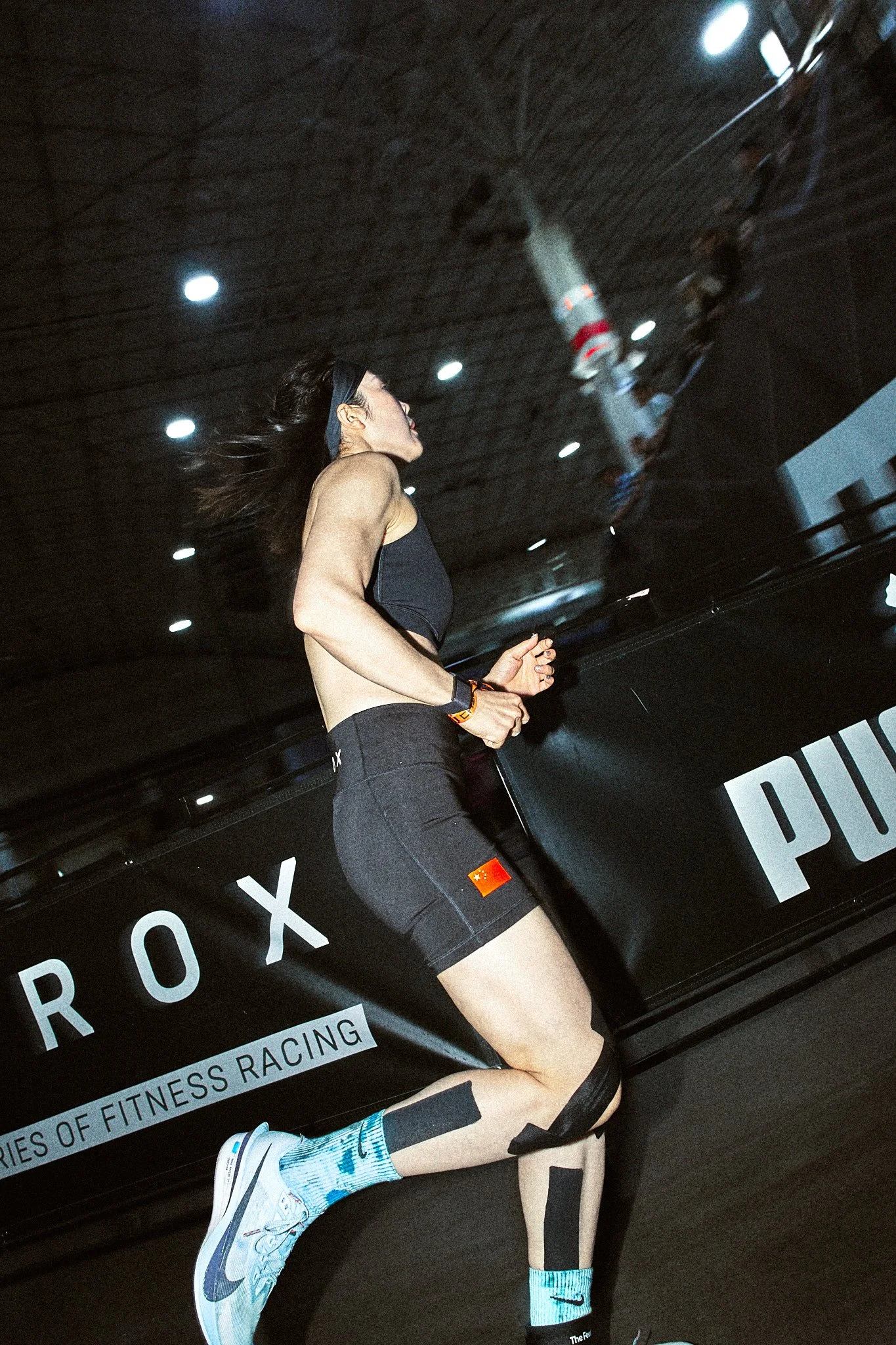
This athlete competing in the Elite 15 was close enough for me to get a good flash output on her. She was actually little blown out and I dropped the highlights in post to balance out the exposure of the image.
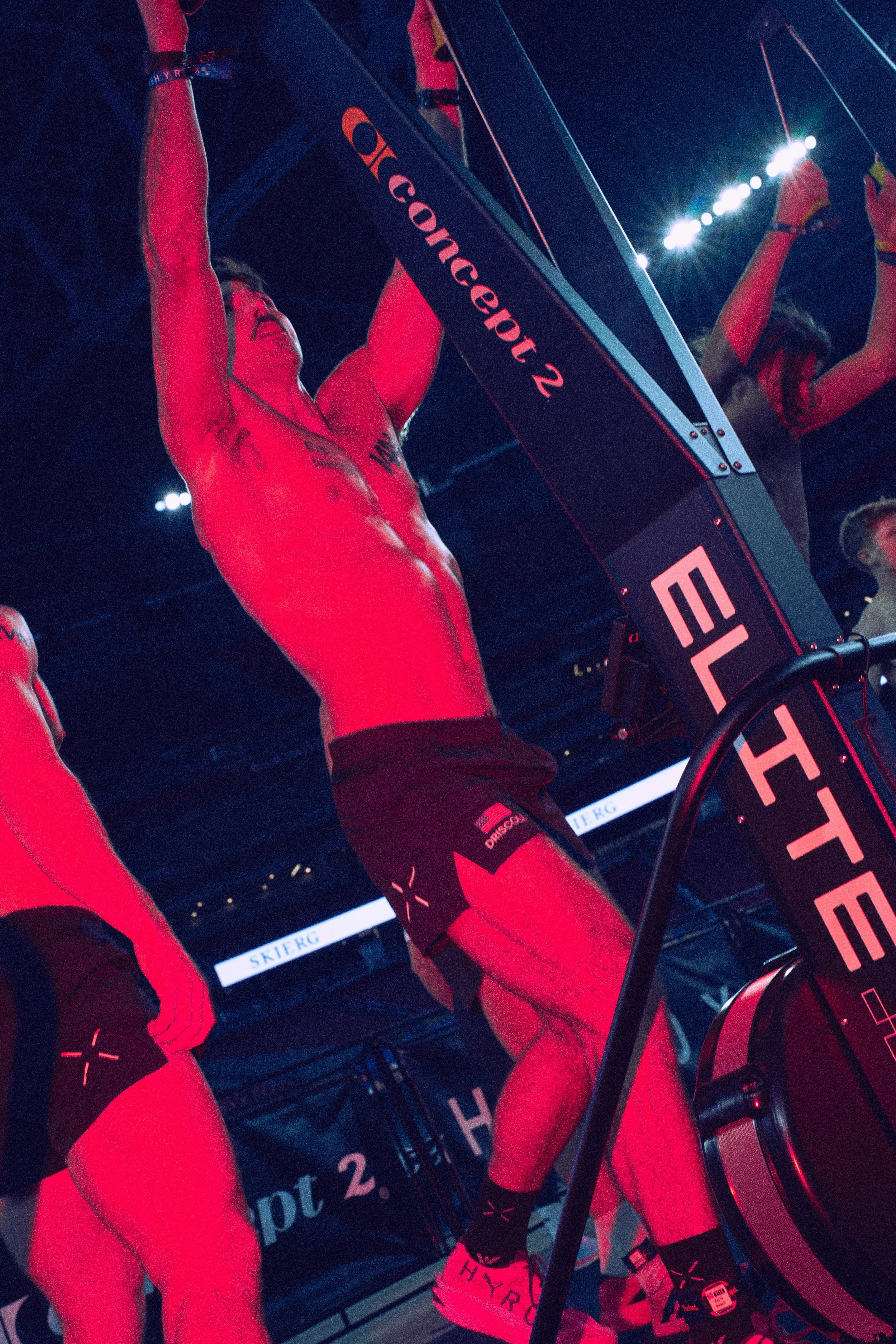
3 Matching shutter speed to movement
In a lot of sports photography, setting shutter at something like 1/2000 and leaving it will be good for the full match.
But in low light environments, I like to push my shutter speed closer to the speed of the movement. I am constantly adjusting it to see if I can squeeze more out of the camera.
For example with HYROX:
Running sections might require higher shutter speeds
But sled pushes move slower
Sandbag lunges are even slower
So instead of 1/2000, you might be able to shoot something like 1/800 or 1/1000 and still get everything sharp.
That gives you a little more flexibility with ISO and helps keep noise down.
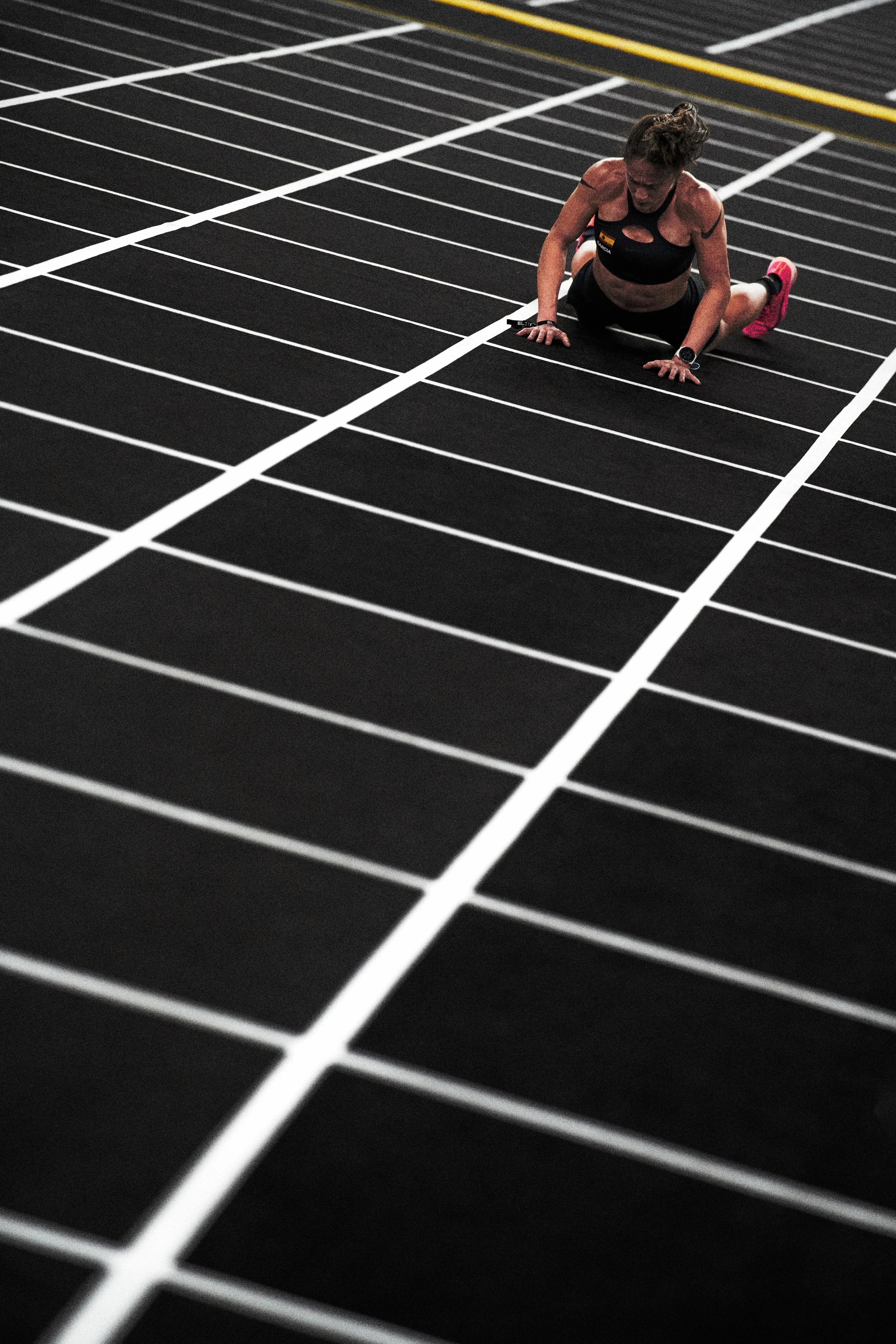
Manuela would have slight pause on her burpee reps which gave me an opportunity to capture her with a slower shutter.
4 Leaning into ISO
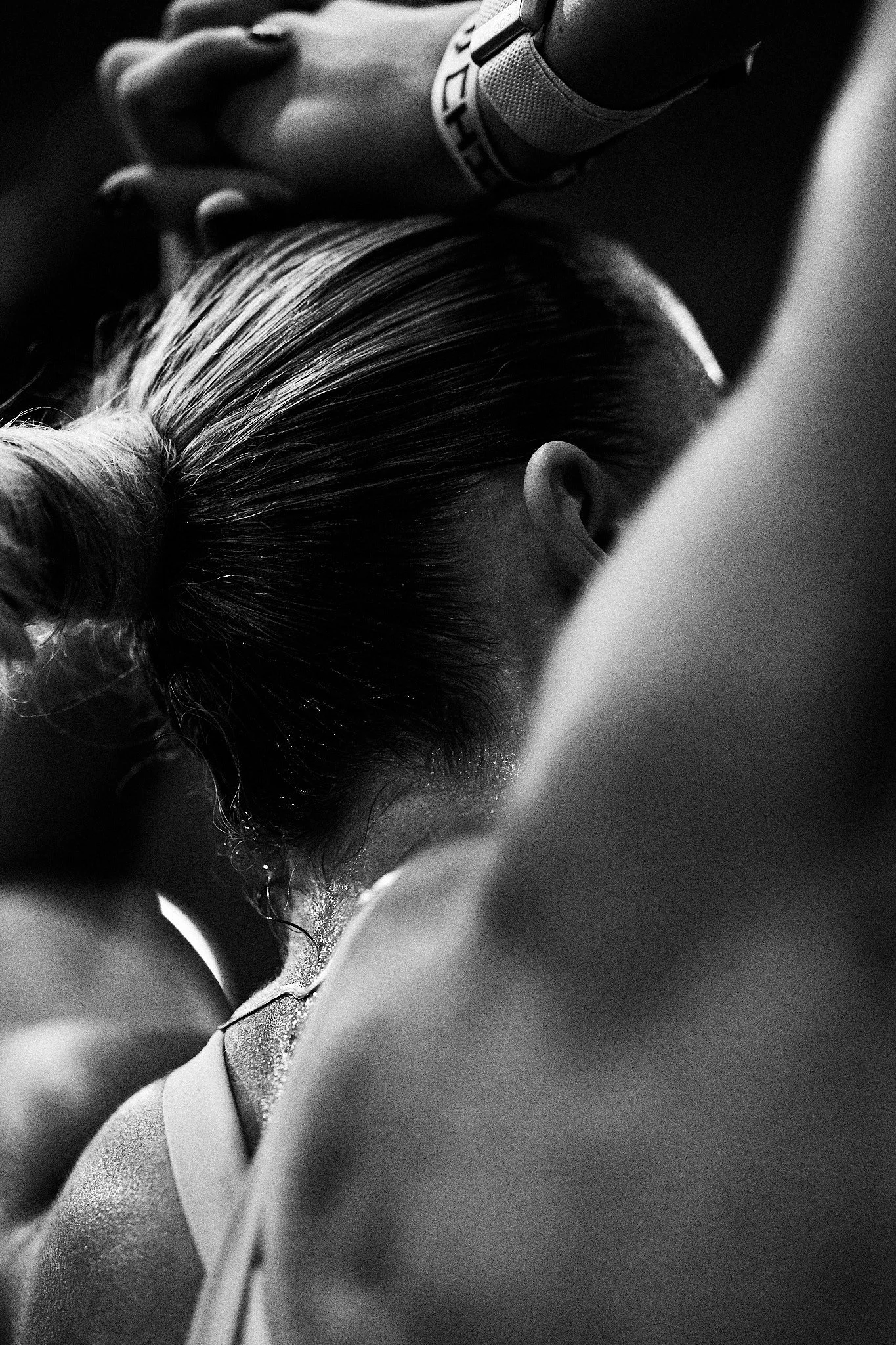
Athletes pausing for rest or between reps is a good time to capture with a more manageable shutter and ISO. This image I didn’t full adjust my shutter to match her movement but I did add grain to the image to blend the gritty look of the higher ISO.
Lastly, I’ve learned to lean into ISO and let my camera do its work. Modern cameras handle high ISO pretty well especially with the ability to clean up noise in post via Capture One or Lightroom. One thing I like to do in post is add a little film grain. It helps blend the digital noise and makes the texture feel more intentional. It definitely gives the image a grittier look, but sometimes that actually works really well for sports.
Final thoughts
Those are four techniques that can help when you’re shooting sports in low light:
Shutter drag
Flash
Matching shutter speed to movement
Embracing higher ISO
Don’t get me wrong — I still love shooting a sunny game or match. But sometimes those overhead stadium lights, spotlights, and darker environments can create really dramatic images too. I’ve also posted my work from the Hyrox Melbourne Major which includes many of these techniques.